📩 If your emails still sound like they were written for “everyone,” they’re probably resonating with no one.
In today’s world, this practice of sending generic emails is no longer acceptable. If your company has not taken the time to learn who your customers are, what their interests are, and what they need, then expect a high declining level of customer loyalty and minimal open and click rates.
That’s where email personalization comes in. When done right, email personalization turns your messages from forgettable inbox clutter into something your audience actually looks forward to reading.
In this post, we’ve created the ultimate checklist of email personalization best practices to help you connect with your audience on a deeper level, boost email engagement, and make every send count.
Ready to make your emails feel personal (and powerful)? Let’s dive in.
What is Email Personalization?
Email personalization is basically the practice of tailoring your emails to match each individual subscriber’s interests, behavior, and preferences instead of sending one generic message to everyone.
Think of it like this: if someone opens your email and sees content that is relevant to them, their name, favorite products, topics they care about, or even offers that match their previous activity, it instantly feels more personal and engaging.
Personalization isn’t just about names. Here’s what you can include in your emails:
- Using their name in the subject line or greeting makes the email feel friendly and direct.
- Recommending products or content based on what they’ve browsed, clicked, or purchased before.
- Segmenting your audience into groups so each group gets emails tailored to their specific interests.
- Timing your emails based on when the reader is most likely to open and engage with them.
- Special occasions like birthdays, anniversaries, or milestones show you remember and care about them.
The basic aim is to make each email look like it was tailor-made for the recipient. Personalization in email marketing, performed correctly, will engage people’s attention, create trust, and stir action, whether that action is clicking a link, reading your blog, buying a product, etc.
In fact, emails with personalized content have a 29% higher open rate and a 41% increased click rate compared to emails without personalization.
So, in a world where inboxes are flooded with generic messages, personalized emails help you create meaningful connections with your audience.
Defining email personalization sets the foundation. To make the most of it, let’s explore the best practices of email personalization that drive better engagement and results.
Best Practices of Email Personalization
Getting email personalization right can be the reason whether an email gets ignored or one that gets opened, read, and clicked. The good news? It’s not complicated; you just need the right approach. Below are some of the most effective practices to make your emails feel more personal, relevant, and worth your subscribers’ time.
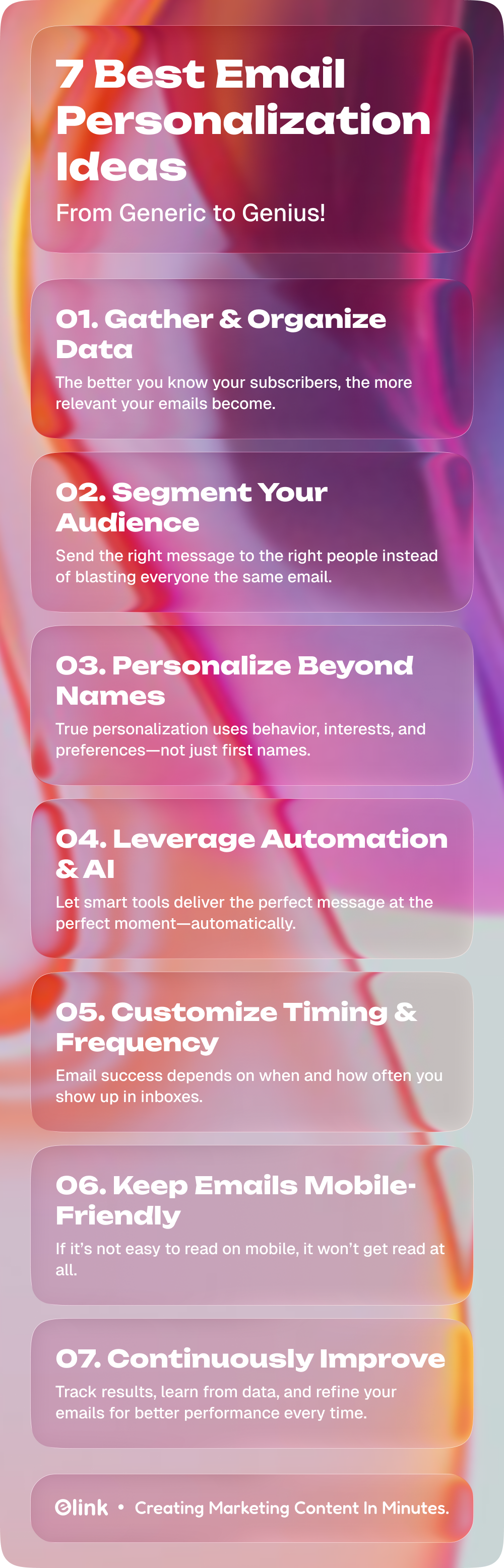
#1. Gather and Organize Data
Gathering and organizing customer data is the starting line for truly impactful email personalization, and honestly, it’s the secret to emails that don’t feel mass-produced.
Collecting data means going beyond just grabbing their email address and first name (though those help too!). The more you understand your users’ preferences, actions, and requirements, the better you can personalize your messages.
For example, Basic information can be acquired during sign up or via a preference centre (where subscribers indicate the type of content they want to receive, and the frequency), while behavioural information – including items that subscribers browse, recent purchases, and frequency with which they open your email messages – is valuable in determining what should be sent to each subscriber next.
Read More: Best Email Subject Lines to Boost Your Open Rates!(Examples)
The foundation of a successful e-mail is responsible handling of data, being open about all data collected, allowing consumers to control their preference settings, and being compliant with privacy legislation. When done right, your emails will stop feeling like noise and start feeling like the helpful, timely messages your subscribers actually look forward to.
So, before sending any email, ask: What do I know about this person? And how can I use that to make their experience uniquely better?
This data gathering and organizing step is the foundation for all other personalization tactics; it’s where the magic begins.
#2. Segment Your Audience
Segmenting your audience is the most effective way to make your emails feel personal. Segmentation basically means dividing your subscriber list into smaller groups, like people who share characteristics, behaviors, or interests, so each group receives content that actually matters to them.
Not every subscriber wants the same thing. Sending the same email to everyone is like offering winter coats to people living in tropical climates; it just doesn’t work. In fact, Mailchimp reports that segmented campaigns see open rates up to 14.31% higher and click-through rates 100.95% higher than non-segmented campaigns. That shows just how powerful segmentation can be.
Segmentation isn’t just a tactic; it’s about making your emails relevant, timely, and meaningful. The more your emails resonate with each subscriber, the more they’ll open, click, and stay connected to your brand.
#3. Personalize More Than Just Names
Using a subscriber’s first name in an email is a good start, but true email personalization goes much further. If you only insert names, your emails can still feel generic. To really grab attention and engage readers, you need to personalize content, recommendations, and experiences based on what you know about them.
Why it matters: Subscribers expect to receive emails that have relevance for them personally, based on their past behaviour or expressed preferences. A study by Campaign Monitor indicates that emails with some degree of personalisation other than just using a subscriber’s name (e.g., email content tailored specifically to the subscriber’s behaviours and interests) will produce far higher click-through rates and conversion rates than emails without such personalisation.
Read this: What are Interactive Emails & Why You Should Send Them?
💡 5 Ways to Personalize Beyond Names
- Content recommendations: Providing content recommendations based on their interests is another option. This may be blog posts, articles, or even resources that show how the content will be useful to them based on their interests.
- Product suggestions: Sending product-related information based on the information gathered from past purchasing or browsing history is a viable option. For example, an online bookstore may send an email with the title “New Releases in Mystery” to its patrons based on their interest in reading Mystery Novels
- Behavior-based triggers: Design emails to be sent on the basis of specific actions, like a welcome email for new subscribers, abandoned cart reminders, or follow-ups after a purchase.
- Location-based personalization: Customize emails based on a subscriber’s city or country. A travel agency could share nearby travel deals or local events.
- Special events & milestones: Celebrate birthdays, anniversaries, or subscription anniversaries with special offers or greetings.
💡 Pro Tip: Think of personalization as a conversation. The more your emails reflect a subscriber’s interests, needs, and actions, the more they’ll feel like you’re speaking directly to them, not sending mass messages.
Personalizing beyond names turns ordinary emails into meaningful, engaging experiences that subscribers actually look forward to opening.
#4. Leverage Automation and AI
Personalization becomes much easier when you let automation and AI do the heavy lifting. Instead of manually crafting every email, you can set up smart systems that send the right message at the perfect moment.
Think of behavior-triggered emails like welcome series, birthday wishes, or abandoned cart reminders. They go out automatically when certain actions happen. AI can also recommend products or content based on what each subscriber has viewed or purchased before, and even choose the best time to send emails when they’re most likely to open them.
By blending automation and AI, you make your emails feel personal at scale, saving time while building stronger connections with your audience.

#5. Customize Timing and Frequency
The timing of your emails is a major factor in your success. A large volume of emails will cause subscribers to experience fatigue and ultimately opt out, while sending fewer than what subscribers would expect would lead them to forget about you. Finding the right balance keeps your audience happy and engaged.
How to do it effectively:
- Send your emails during times that will be convenient for your subscribers to receive and view them, based on their historical engagement with your emails.
- Adjust frequency for different groups. Active readers can handle more, while less engaged ones may need fewer touches.
- Test and refine regularly to see what timing and cadence work best for your audience.
The right timing and frequency make your emails feel thoughtful, relevant, and less like spam, helping you stay on your audience’s radar without annoying them.
#6. Keep your emails mobile-friendly
More than 61 % of emails are opened by mobile devices. If your email looks messy or hard to read on a phone, readers are likely to delete it without engaging, no matter how great your content is.
For instance, a travel brand can focus on showcasing one destination per section instead of cramming multiple offers into a single screen. Large clickable options such as “Shop Today” & “Book Now!” provide the end-users interaction hassle-free during use. Maintain both email content & subject lines properly sized for optimal accessibility on Small Screens.
Mobile-friendly emails not only look professional but also drive higher engagement and more clicks, helping your audience interact with your content anytime, anywhere.
#7. Continuously Improve
After sending personalized emails, the work still hasn’t ended. This means tracking email marketing metrics such as open rates, click rates, and conversion rates to understand whether the email works or not.
By learning from your results and making small improvements, your emails become more effective, engaging, and relevant with every send.
Now that you know the best practices for email personalization, the next step is making it easier and faster to implement. Tools like elink.io can help you create beautiful, personalized email newsletters in minutes, instead of spending hours designing and curating content.
Read this: How To Write A Gentle Reminder Email? (Steps & Examples)
💡 Use elink.io to Create Personalized Email Content
If you want to make your emails more personal without spending hours designing them, elink.io can be a game-changer.
Elink.io is the smartest content curation tool that helps you instantly turn your curated links, articles, or product pages into beautiful, mobile-friendly email newsletters so each message feels fresh, relevant, and tailored to your readers.
Here’s what you can do with elink.io:
✅ Build visually stunning newsletters in minutes: Simply add links, and elink.io will automatically generate beautiful email newsletters for you. You can personalize fonts, colors, and designs to ensure that your newsletter looks good as your brand with NO design skills required.
✅ Personalize for different audiences: Curate unique content for specific customer groups or segments. This makes each email feel handpicked for them, which increases engagement and helps build stronger connections with your readers.
✅ Embed newsletters anywhere: Share your newsletters not only through email but also as web pages or blog posts. This gives your content a longer life and makes it easy to reach people on multiple channels.
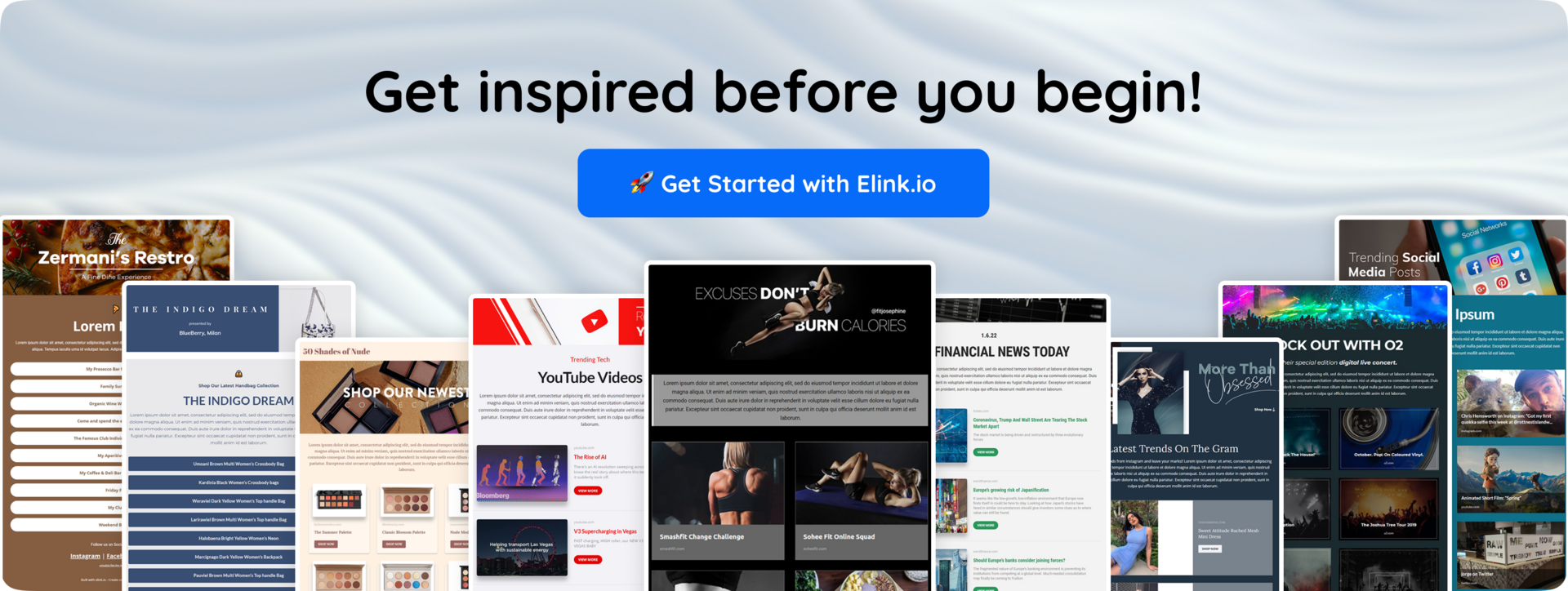
✅ Track engagement with built-in analytics: See which links get the most clicks and which newsletters perform best. These insights help you learn what your audience likes and guide you in creating even more personalized content next time.
✅ Use the built-in RSS Builder: Automatically pull the latest blog posts, articles, or updates from any RSS feed and turn them into beautiful webpages. It saves you time and ensures your subscribers always see your freshest content.
“With all these tools in one place, elink.io helps you craft emails that feel personal, look stunning, and keep your audience coming back for more.”
Final Words
Personalization isn’t just a trend; it’s the essence of good email marketing, as people want to feel acknowledged, want to feel appreciated, want to feel like people are getting to know them, and ultimately, that’s where the successful brands will rise in a sea of competition.
You don’t have to reinvent your whole strategy all at once. Start small by using names, tailoring content to what your audience cares about, or sending emails at times when your readers are most active. These small steps can spark genuine connections and build trust that lasts.
At the end of the day, each personalized email is an opportunity to show your audience that they matter. When people feel valued, they come back again and again.
FAQs
What is email personalization?
Email personalization is all about making your emails feel like they were written for one specific person. Instead of sending the same message to everyone, you tailor it to each reader using their name, past purchases, or topics they’ve shown interest in. It turns a simple email into something that feels thoughtful and relevant.
How do you personalize an email?
Start by learning more about your subscribers. Use their names in subject lines or greetings, mention things they’ve browsed or bought, and send them content that fits their interests. You can also group people into segments based on behavior or preferences. The goal is to make the email sound like it was created just for them.
What is an example of a personalized email address?
A personalized email address shows there’s a real person behind the message. For example, sara@yourcompany.com or john.marketing@brand.com feels much more personal than a generic address like info@yourcompany.com or noreply@brand.com. It helps build trust and makes people more likely to open your emails.
Do personalized emails perform better?
Yes, personalized emails often perform much better than generic ones. They get higher open and click-through rates because people are more likely to engage with content that speaks directly to their interests or needs. Personalization also builds stronger relationships and brand loyalty over time.
What is considered a best practice for emails?
Some effective email practices are ensuring that your email makes total sense and saying what needs to be communicated clearly and concisely, making sure that emails look good and work fine across all devices with great designs, personalizing the email where possible, including a call to action in your email so that people understand what to do, and avoiding spam words in an email to ensure they don’t land in spam.
Keep Reading & Learning 📚
How to Build a Monthly Email Marketing Calendar that Works
How to Start Email Automation: Best Tools & Tips
Best 10 Expert Tips to Improve Newsletter Open Rates
How to Create a High-Converting B2B Newsletter in Minutes