Customers don’t just buy products, they buy experiences. They remember how you made them feel when something went wrong. They notice when you reply quickly. They talk about you when you go the extra mile. And when they trust you, they come back again and again.
But loyalty doesn’t happen by accident. In a world full of discounts, ads, and endless choices, customers switch brands in seconds. One bad experience can push them away, while one thoughtful gesture can turn them into lifelong fans.
Well, the good news is you don’t need a huge budget or flashy marketing to build strong customer loyalty. What you need is consistency, empathy, and a smart strategy.
In this blog, we’re breaking down 10 proven tactics that actually work, practical, realistic, and easy to apply, so you can strengthen customer relationships, increase repeat purchases, and grow your revenue the right way.
Before we jump into the strategies, let’s pause for a moment to understand exactly what customer loyalty is.
What is Customer Loyalty?
Customer loyalty isn’t just about someone buying from you twice. It’s about choice.
It’s when a customer could go anywhere else for cheaper options, flashy competitors, endless ads, but still chooses you. Not out of habit. Not just for convenience. But because they trust you.
A loyal customer doesn’t just purchase from your brand; they stay with you even when many alternatives are available. They recommend you to friends. They defend your name in conversations. They forgive the occasional mistake because they have a strong belief in your brand.
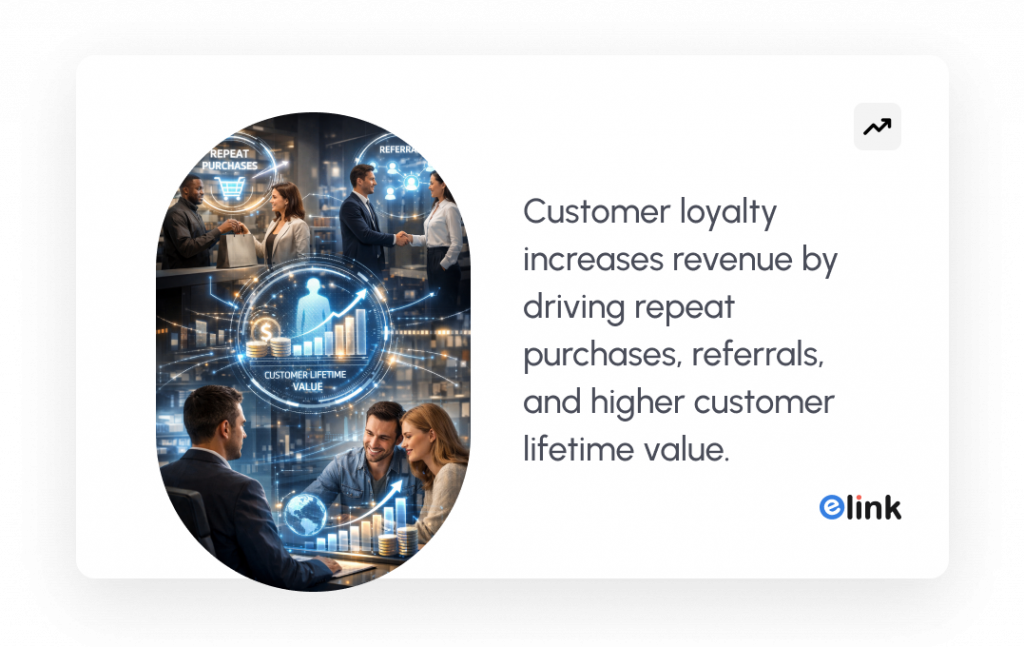
And that’s what makes customer loyalty so powerful: it turns one-time buyers into long-term relationships.
Now here’s where it gets even more interesting. Loyalty isn’t just good for customers; it completely changes the way a business grows and survives. Want to know how? Read on..
Impact of Strong Customer Loyalty on the Business
When customers stay, businesses become stronger. It’s as simple as that.
Strong customer loyalty brings stability. Instead of constantly worrying about where the next sale will come from, you have a steady stream of repeat buyers who already trust your brand.
That predictability makes planning, forecasting, and scaling much easier.
It also reduces your marketing costs. Winning a new customer usually costs more than keeping an existing customer loyal.
Loyal customers don’t need convincing every time; they already know your value. In fact, many of them end up bringing new customers through referrals and word-of-mouth.
Revenue grows naturally, too. Loyal customers will spend more over time. They are more willing to explore new products or services or buy add-ons since they trust your brand.
And above all, loyalty develops resilience. Markets change. Trends shift. Competitors appear. But when it comes to dealing with uncertainty, businesses that have a loyal customer base are in better positions due to the fact that they have made relationships and not merely transactions with their clients.
In the long run, strong customer loyalty doesn’t just increase sales. It creates a foundation for sustainable, long-term growth.
In short, strong customer loyalty isn’t just a growth tactic; it’s a powerful driver of repeat purchases, higher customer retention, and long-term revenue growth.
So, how do you actually build customer loyalty in a way that increases retention and boosts revenue consistently?
Let’s break down the most effective and proven approaches.
Read more: How to Use Customer Feedback to Grow Your Business
10 Best Strategies to Strengthen Customer Loyalty and Boost Revenue
Building long-term relationships is the foundation of customer loyalty strategies that increase repeat purchases and drive sustainable revenue growth. Let’s explore 10 amazing strategies to strengthen customer loyalty and boost revenue.
1. Deliver Outstanding Customer Service
If there’s one strategy that directly impacts loyalty and revenue, it’s customer service. People may forget discounts. They rarely forget how you made them feel.
Outstanding customer service isn’t about saying “Thank you for contacting us” in a scripted tone. It’s about making customers feel heard, respected, and valued at every touchpoint.
Here’s what that really looks like:
- Respond quickly. No one likes waiting, especially when they have a problem. Fast responses show customers that their time matters to you. Even a simple “We’re checking this for you” can build trust.
- Listen before solving. Don’t jump to a solution before understanding the issue. Let customers fully explain their concern. Often, people just want to feel acknowledged.
- Empower your team. When the employees have to get five approvals in order to resolve a minor problem, customers become impatient. Allow your support team to make decent decisions that address issues instantly.
- Go one step beyond. Did a customer complain about a delayed order? Don’t just apologize, offer a small coupon or free shipping on their next purchase. That extra effort turns frustration into appreciation.
- Be consistent across channels. Whether someone contacts you via email, chat, phone, or social media, the experience should feel seamless. Consistency builds reliability, and reliability builds loyalty.
When customers know they’ll be treated well, especially when something goes wrong, they stop shopping around. They stay. And loyal customers don’t just return… they recommend.
That’s how great service quietly becomes a powerful revenue driver.
2. Personalize the Customer Experience
Personalization is not a trend. It is a proven customer retention strategy approach that enhances customer engagement, repeat purchases, and customer lifetime value.
To personalize the customer experience, you need to use real customer data, like you can say, the purchase history, browsing behavior, location, and interaction patterns. This data helps you deliver relevant communication instead of generic promotions.
As an example, in case a customer is a regular buyer of fitness products, your email marketing campaigns should highlight new workout gear or related accessories. These small but specific actions increase conversion rates because they match customer intent.
Customer segmentation also plays a key role. First-time buyers, repeat customers, and high-value customers should not receive the same messages. A new customer may need onboarding emails that build trust.
The goal is relevance. Whenever customers are presented with things that interest them, such as offers, suggestions, and content, they feel acknowledged.
It is also this feeling of relevance that enhances brand trust, enhances repeat purchases, and is directly related to the enhancement of revenue in the long term.
Read more: Direct & Indirect Competition: The Differences, Examples, and Process!
3. Launch a Customer Loyalty Program
A well-structured customer loyalty program encourages repeat purchases, increases customer retention, and improves customer lifetime value.
A loyalty program gives customers a clear reason to come back. Instead of buying once and leaving, they stay engaged because every purchase adds value, whether through reward points, cashback, exclusive discounts, or member-only benefits.
The best loyalty programs need to be easy and clear. The customers must instantly realize:
- How do they earn rewards
- How many points equal a benefit
- When and how they can redeem them
For example, a points-based loyalty program can offer 1 point for every ₹100 spent, with 100 points redeemable for a discount voucher. Clear rules increase participation because customers can easily see the benefit.
You can also integrate loyalty programs with referral marketing. Offer bonus points when customers refer friends who make a purchase. This not only strengthens loyalty but also reduces customer acquisition costs.
Most importantly, make the rewards meaningful. If customers have to spend a large amount just to earn a small discount, participation will drop. The perceived value of the reward must match the effort required.
When customers feel they are earning benefits every time they shop, they are less likely to switch to competitors.
In the long term, the successful loyalty program enhances the repeat purchase rate, better retention metrics, and directly increases revenue growth.
4. Build Emotional Connections with Your Audience
Customers don’t stay loyal only because of price or convenience. They stay because they feel connected. Emotional connection increases brand trust, strengthens customer relationships, and improves long-term retention.
Well, building emotional connections starts with brand identity. Your brand values, mission, and messaging should be clear and consistent.
If your business is in favor of sustainability, ethical sourcing, or community work, do not tell it in generic slogans, but demonstrate it. Customers believe in brands that represent something in particular.
Storytelling is another powerful tool. Share real customer experiences, behind-the-scenes stories, or the journey of how your product was created.
When customers understand the effort, purpose, or people behind the brand, it creates relatability. Relatability builds emotional attachment.
When your customers are attached to your brand emotionally, they don’t compare you with competitors based only on price. They choose you because they trust you.
And emotional loyalty is far more powerful than transactional loyalty; it leads to repeat purchases, positive word-of-mouth, and sustainable revenue growth.
5. Collect and Act on Customer Feedback
Customer feedback is one of the most reliable tools for improving customer satisfaction and retention.
Seek feedback in the form of post-purchase surveys, review requests, and customer satisfaction (CSAT) forms. Target certain questions regarding the quality of the products, the delivery experience, and the support interactions. Elaborated feedback enables you to discover areas of service and product failure.
More importantly, act on the feedback. In case of delayed deliveries by customers, enhance logistics.
In case they propose improvements to the products, introduce feasible changes. Customers become more trusting when they realize that their views are acted upon.
Respond to both positive and negative reviews. A thoughtful response to a complaint can rebuild confidence and prevent customer churn.
In short, by analysing feedback regularly, we can ensure improved service quality and strengthen long-term customer loyalty.
6. Provide Consistent Value Beyond Products
If customers only hear from you when you want them to buy something, the relationship stays transactional. But when you consistently provide value beyond your products, the relationship becomes stronger and longer-lasting.
Providing value simply means assisting customers in resolving issues that they are facing, helping them learn something useful, or making better decisions, even when they are not actively purchasing from your brand.
For example, if you’re selling skincare products, share educational content about skin types, ingredient benefits, and daily routines.
If you run a financial service, publish guides on budgeting, saving strategies, or credit management. This type of content marketing builds trust because you are supporting customers, not just selling to them.
Email newsletters are another effective channel for delivering ongoing value. Instead of sending only promotional offers, include helpful tips, industry insights, product usage guides, and expert advice.
When subscribers gain useful information from your emails, open rates and long-term engagement naturally improve.
You can also provide value through exclusive resources such as webinars, downloadable guides, early product previews, or member-only content. These benefits increase perceived brand value and strengthen customer retention.
By sharing valuable content consistently, you can build authority for your brand. When customers start seeing your brand as a reliable source of information and support, they return not only for products but for guidance.
Over time, this trust increases repeat purchases, improves customer lifetime value, and strengthens overall brand loyalty.
Read more: Brand Storytelling: What is it & How to Create One?
7. Create a Seamless Omnichannel Experience
Today’s customers don’t interact with your business in just one place. They may discover your brand on Instagram, browse products on your website, ask questions on live chat, and complete the purchase through a mobile app. If these experiences feel disconnected, trust drops.
A seamless omnichannel experience means that every touchpoint, website, mobile app, social media, email marketing, customer support, and physical store works together smoothly.
Start with consistency. Your pricing, product information, branding, and messaging should be the same across all platforms. If a product shows one price on your website and a different price on your app, it creates confusion and reduces credibility.
Next, integrate customer data across channels. When a customer puts products into their cart on a desktop, they should be able to view the same cart on mobile.
If they contact customer support, the representative should already have access to their order history. This minimizes repetition, and customer satisfaction is enhanced.
The checkout and payment procedures should also be easy and unified. Provide a variety of payment methods, safe checkout, and easy interchangeability of devices. Friction at checkout is one of the biggest causes of cart abandonment.
Finally, maintain consistent customer support. Regardless of the approach used by customers to contact the company (through mail, telephone, or social network), the quality of response and the turnaround time must be the same.
When customers move between channels without confusion or delay, the experience feels effortless. And when buying feels effortless, repeat purchases increase, strengthening both customer loyalty and revenue growth.
8. Reward Referrals and Advocacy
Happy customers would become your greatest marketing channel, but only if you give them a reason to share.
The referral program should be structured in such a way that it will prompt the existing customers to refer their friends, families, or co-workers to your brand.
Provide some good incentives, like discount vouchers, cashback, reward points, or special privileges, once a customer referred makes a purchase. This enhances client acquisition and reduces marketing costs.
You can even make the referral process simpler. You can provide your customers with a unique referral link that can be shared by the customers via WhatsApp, email, or social media. The easier it is to share, the greater the rate of participation.
You can also reward brand advocacy beyond referrals. Feature customer testimonials, repost user-generated content, or highlight loyal customers in your community campaigns. Recognition strengthens emotional loyalty.
When customers are rewarded for spreading positive word-of-mouth, they feel valued, and your brand benefits from steady, trust-based growth.
9. Offer Exclusive Perks and VIP Access
Exclusivity creates a stronger sense of brand value and customer loyalty. Customers feel that they belong to an exclusive group, and therefore, this makes their attachment to the brand stronger.
Exclusive perks can include early access to product launches, members-only discounts, free shipping, priority customer support, or limited-edition products. These benefits should not be available to everyone; the sense of privilege is what makes them effective.
VIP programs work especially well for high-value customers. Identify customers with high purchase frequency or strong customer lifetime value (CLV) and offer tier-based rewards. For example, premium members can receive advance sale previews or special event invitations.
Early access campaigns are also powerful. Allow loyal customers to shop seasonal collections or limited inventory before the general public. This not only increases conversions but also reduces the risk of stock shortages.
The key is to make the perks meaningful. If the benefits feel small or common, they won’t influence behavior. But when customers receive real advantages, they will be more willing to buy and stay a customer of your brand.
10. Stay Transparent and Build Trust
Trust is the foundation of customer loyalty. A lack of trust ensures that no loyalty programme, discount, or even marketing campaign can hold on to customers.
The first step towards transparency is good communication. Display accurate product descriptions, pricing details, shipping timelines, and return policies. Hidden charges, vague policies, or misleading claims quickly damage credibility and increase customer churn.
Privacy of data is also significant. Be transparent about the way you gather, retain, and use the data of customers. Confidence is gained through secure payment gateways and conspicuous privacy policies, particularly over the internet.
You can also use social proof to strengthen trust. Publish verified customer reviews, ratings, and testimonials on your website. True responses give hope and credibility to the potential customers and brand assurance.
And when trust deepens, loyalty follows. Loyal customers purchase more often, recommend your brand, and contribute to steady, long-term revenue growth.
But implementing these strategies consistently requires the right tools. Especially when it comes to delivering valuable, relevant content at scale. That’s where tools like elink.io become very handy. Let’s explore more about elink.io.
Read more: Tofu, Mofu & Bofu: The 3 Ingredients To Craft The Sales Funnel!
Boost Customer Retention with Smart Content Curation Using Elink.io
Many brands struggle to consistently create and share high-quality, relevant content that keeps customers engaged, informed, and coming back for more, especially without spending hours designing and publishing every single piece.
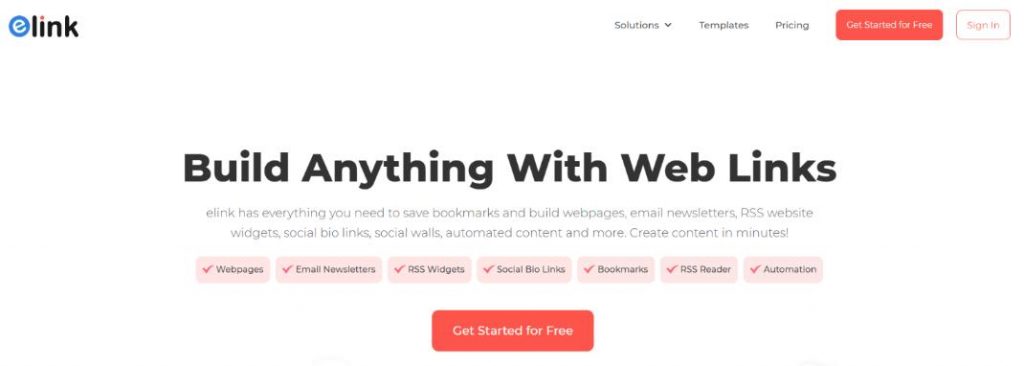
Elink.io solves this problem by making content curation fast, visual, and easy to share across every channel your customers use. Instead of spending time manually creating newsletters, blog updates, or web pages, Elink.io lets you gather, organize, and publish curated content using just links, no coding or graphic design needed.
At its core, Elink.io is a smart content curation and publishing platform that helps you collect information from around the web, add your own context or commentary, and present it in beautiful, professional formats. It works as a visual bookmark manager, email newsletter creator, web page builder, and RSS content dashboard, all in one place.
Key Features of elink.io
👉 Visual Bookmark Manager: Elink.io enables you to store any weblink articles, videos, product pages, social posts, cloud files, and so forth, in the form of visual cards that automatically fetch images, titles, and descriptions. This replaces the cluttered bookmarks and enables one to reuse and repackage content in the future.
👉 Smart Content Curation Tools: After saving links, you can make collections of links and add your own notes or insights. That means you can create curated content that feels thoughtful and valuable, not random or generic. This helps build authority with your target audience and keeps them engaged.
👉 Multiple Publishing Formats: With Elink.io, you can turn your curated content into:
- Stand-alone web pages
- Responsive email newsletters
- Embeds on your own website or blog
All these formats are designed to look clean and professional, so your content doesn’t just inform it looks great too.
👉 Beautiful Responsive Templates: You don’t need design skills. Elink.io offers more than 50 high-quality layouts that automatically adjust to different devices. After posting, you can change templates and make your content look professional with minimum efforts.
👉 RSS Feed Integration and Automation: Connect your favorite blogs, news sources, or industry sites through RSS feeds, and Elink.io will help you discover and pull in fresh content quickly. It is even possible to automate the content updates of web pages and spend your own free time doing this, yet keep your audience involved with current content.
👉 Team Collaboration: If you’re working with a marketing or content team, Elink.io allows multiple users to save links, organize collections, and create content together. This centralized workflow increases productivity and ensures consistent content quality.
Using Elink.io makes it easier to consistently share curated content that educates, inspires, and delights your audience, which in turn strengthens customer loyalty, boosts engagement, and supports your revenue goals.
Conclusion: Turn Loyal Customers Into Long-Term Revenue
Well, one thing becomes clear: loyalty isn’t a “nice-to-have.” It’s your real growth engine.
You can spend thousands bringing in new customers. Or you can take better care of the ones who already believe in you.
Because loyal customers don’t just buy more. They buy faster. They forgive small mistakes. They recommend you without being asked. They become your unpaid marketers, your strongest testimonials, and your most reliable source of steady revenue.
So instead of constantly chasing the next new lead, start looking at the customers already in your world. Are they feeling valued? Heard? Appreciated?
Strengthen those relationships, and revenue follows naturally.
In the end, long-term growth in a business doesn’t come from one big sale. It comes from trust built over time with your audiences.
FAQs
Q. What is the primary factor that directly builds customer loyalty?
Always good experiences. Customer trust is built when they feel valued, heard, and treated fairly each time, and the trust produces loyalty.
Q. What is customer loyalty, and why does it matter for business growth?
The loyalty of the customers comes when they purchase your brand as compared to your competitors. This is important as they can spend more, recommend other people, and generate more continuous and stable revenue.
Q. What’s the difference between customer satisfaction and customer loyalty?
Satisfaction refers to the fact that a customer is delighted with one experience. Loyalty implies that they will continue to come back even when they have alternatives.
Q. What are the most effective ways to retain existing customers?
Offer consistent value, offer excellent customer service, customize messages, encourage repeat business, and above all, establish genuine relationships and not business transactions.
Further reads:
5 Marketing Activities That Will Enhance Business Performance!
Relationship Marketing Strategies To Boost Your Business Growth!
Target Market Analysis: What is it & How to Identify?
What are the Best SaaS Marketing Strategies for Fast Growth
How Does Social Media Impact on Consumer Behavior?