Success in the B2B world is largely about creating long-lasting connections with prospective customers. Unlike the quick consumer sales, earning the trust of B2B leads takes time, thoughtful communication, and real value. That’s where a well-crafted monthly newsletter steps in. The monthly B2B newsletters are your chance to stay visible, deliver helpful insights, and spark conversations that matter to your clients.
So, are you looking to make your monthly newsletter stand out and truly connect with your audience? Keep reading. This guide will walk you through a simple yet powerful plan to turn cold B2B leads into loyal business partners.
But before you start planning newsletters, let’s first look at what a B2B newsletter is and how it can become your most powerful tool for nurturing leads.
What is a B2B Newsletter?
Okay, let’s break it down in simple terms for you.
A B2B newsletter is a regular email that businesses send to other businesses. It is like a bridge between businesses. Here, you’re not going to deal with everyday consumers like in sales, but such B2B newsletters are specifically created for professionals, decision-makers, and teams inside companies.
Basically, it is a regular email update that delivers value, either through industry insights, expert tips, product updates, or resources that help businesses grow.
For example, a SaaS company might send a newsletter sharing productivity hacks, while a manufacturing brand could share the latest trends in supply chain management.
In short, a B2B newsletter is more than an email; it’s a smart tool to educate, engage, and stay top-of-mind with the people who matter most to your business.
Now that you understand what a B2B newsletter really is and how brands use it, let’s explore why it plays such a powerful role in nurturing leads.
Also Check: How to Create a High-Converting B2B Newsletter in Minutes
Why B2B Newsletters Matter for Lead Nurturing?
Winning a lead is only the beginning. The real work starts with nurturing that leads to earning their trust, answering their questions, and staying in their mind until they’re ready to buy. That’s where B2B newsletters truly shine.
A B2B newsletter acts as a calm, friendly follow-up email with other business professionals. Instead of pushing sales calls, you show up in their inbox with content that actually helps them. Over time, this builds a connection that makes choosing your business an easy choice.
Here’s why newsletters are great for nurturing leads:
- Keep the conversation alive – Leads might not be ready to buy right away, but newsletters help keep you on their radar.
- Teach without overwhelming – Complicated products or services become easier to understand with simple, valuable tips.
- Build trust and credibility – Sharing real stories and industry news shows you know your stuff.
- Make it personal – Tailor your emails to different groups so each person gets content they care about.
- Ease them toward a sale – When leads finally talk to sales, they already trust you and know your value.
For example, imagine a SaaS company offering a free trial. Instead of waiting silently, they send weekly newsletters with handy tips, success stories, and quick guides. By the end, the lead not only knows how to use the product but also sees its value, making the decision to upgrade feel natural.
In short, B2B newsletters don’t just fill inboxes; they build relationships. And in business, relationships turn leads into loyal customers. Now, let’s move on to planning a monthly newsletter for nurturing B2B leads.
Read more: 20+ Smart Ways to Boost Your Newsletter Signups Instantly
How to Plan a Monthly Newsletter for B2B Leads?
Planning a monthly newsletter for B2B leads is a smart way to nurture relationships with clients and guide prospects toward becoming loyal customers of your business. A well-thought-out newsletter keeps your audience engaged, informed, and interested in what your business offers. Here’s a step-by-step guide to help you plan a B2B newsletter that delivers real value every month.
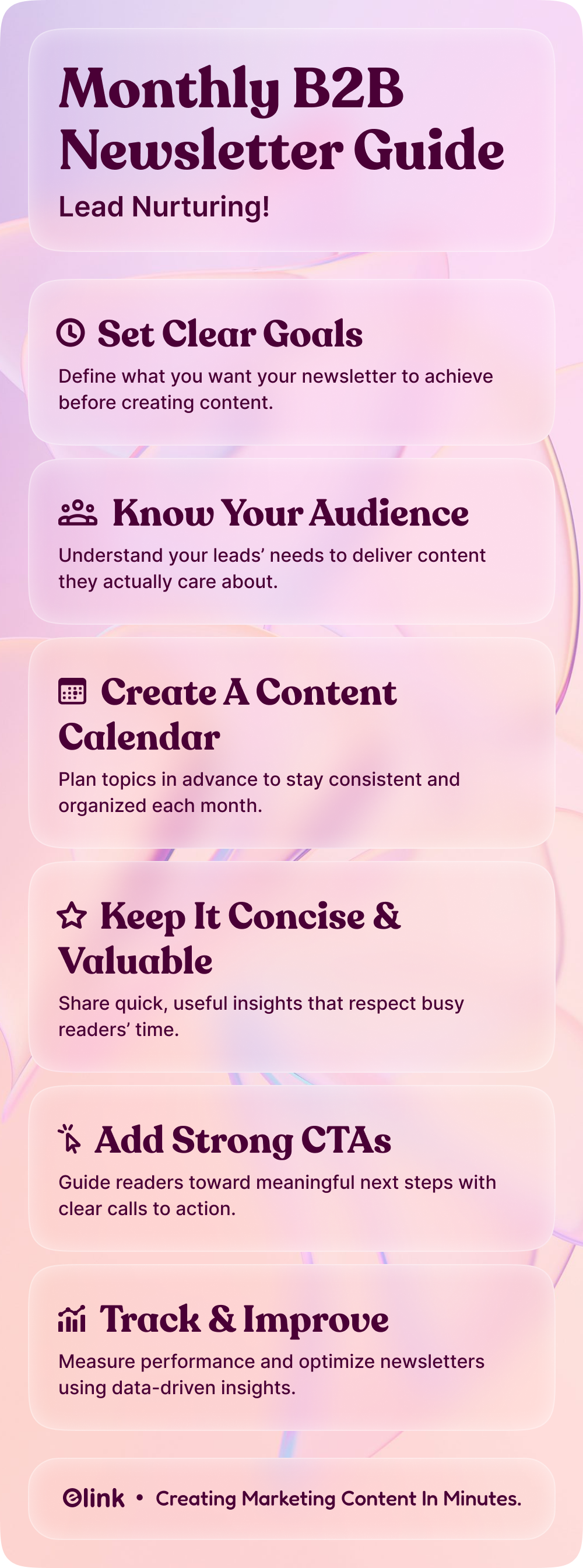
#1. Set clear goals
Before you start creating your B2B newsletter, it’s important to know exactly what you want to achieve through those newsletters. When you know exactly what you want to achieve, you will have good control over your content as well as in measuring how successful you become in achieving your goals.
Are you trying to educate your leads about your industry? Do you want to build trust so they feel comfortable doing business with you? Or are you looking to increase the number of visitors to your website or encourage them to sign up for a demo?
For example, if your goal is to educate your leads, your newsletter might focus on sharing helpful tips, how-to guides, or industry news. If your goal is to generate more sales, then your content might highlight case studies or special offers.
📝 Quick Fact: According to a study, companies that set specific marketing goals are 376% more likely to report successful campaigns. So having a clear goal is not just helpful, it makes a big difference in results.
By setting goals, you give yourself a roadmap for every newsletter you send. It keeps your message focused and your readers engaged, making your newsletter a powerful tool to move leads closer to becoming customers.
#2. Know your audience
One of the most important steps in planning your newsletter is understanding who you’re writing for. Knowing your audience means understanding their challenges, needs, and what kind of information will help them the most. If you don’t know what your leads care about, your newsletter might miss the mark and end up ignored.
For example, if your B2B leads are mostly IT managers, they might be interested in newsletters about the latest tech trends or tips for improving system security. On the other hand, if you’re targeting marketing directors, content about customer engagement or new marketing tools would be more useful.
Research shows that emails tailored to the interests of the audience can increase engagement by up to 74%. So, taking the time to really know your audience can make your newsletter much more effective.
By understanding your leads, you can create content that speaks directly to them, making your newsletter a valuable resource rather than just another email in their inbox. And this sense of connection is what draws your readers to continue reading your newsletter and builds trust over time.

#3. Create a content calendar
You can reduce stress and maintain consistency by planning your newsletter ahead of time. A content calendar is a way of planning your newsletters by specifying what topics will be included in each newsletter and how often they will be delivered to subscribers.
For example, you might decide to share industry news in the first week, a case study in the second, helpful tips in the third, and a product update or special offer in the fourth. When you plan your content very well in advance, it will become super easy to stay on track and ensure that your audience gets a good mix of valuable information.
Consistency is key in newsletters. Companies that send regular emails see a 33% higher engagement rate compared to irregular senders. A content calendar helps you maintain that rhythm and build trust with your readers over time.
By creating a content calendar, you’ll stay organized, plan better content, and make sure your newsletter is something your leads look forward to each month.
Check This: How to Improve Newsletter Design for Better Engagement
#4. Keep it concise and valuable
People are busy, especially in the B2B world. When your newsletter lands in their inbox, you want to make sure it grabs their attention quickly and delivers useful information without overwhelming them. That means keeping your content short, clear, and to the point.
Instead of long paragraphs, use short sentences, bullet points, and clear headings. Focus on sharing tips, insights, or news that your readers can use right away. Remember, your goal is to make their day easier, not add to their workload.
Studies show that emails with concise content get higher read rates and more clicks. So, by keeping your newsletter tight and valuable, you make it more likely your leads will actually read and act on what you send.
In short, respect your readers’ time and give them something helpful in every issue; that’s the secret to keeping them coming back for more.
#5. Include strong calls to action
A great newsletter doesn’t just share information; it guides your readers on what to do next. That’s where calls to action (CTAs) come in. A clear and strong CTA encourages your leads to take the next step, whether it’s visiting your website, downloading a resource, signing up for a webinar, or reaching out to your team.
For example, instead of just telling a story or sharing tips, end your newsletter with something like, “Download our free guide to boost your productivity,” or “Schedule a demo to see how our solution works.”
Research shows that emails with a single, focused CTA are known to increase click-through rates by up to 371%. So, having a clear CTA makes your newsletter more effective in moving leads closer to becoming customers.
Make your CTAs easy to spot and the action simple to complete. That way, your readers won’t just read, they’ll engage and take meaningful steps toward working with you.
#6. Track the results and improve
As soon as you start sending out your newsletters, it’s necessary to follow up on their success. To do this, you need to track various KPIs (key performance indicators), including open rates, CTR (click-through rate), and conversion rates.
By analyzing your KPIs, you will know which aspects of your newsletter are successful and where improvements can be made. This information helps you make smarter decisions for future emails.
Like, if you notice certain topics get more clicks, you can create more content around those. Or, if your open rates are low, it might mean you need to improve your subject lines.
Data shows that businesses that regularly review their email performance improve engagement rates by up to 30%. So, tracking results isn’t just useful, it’s necessary to make your newsletters better and more effective over time.
By paying attention to your newsletter’s performance, you can keep learning and improving, making each issue stronger and more valuable to your leads.
By following these steps, you can create a monthly newsletter that not only keeps your B2B leads engaged but also builds trust and moves them closer to becoming customers.
Now, to make this process of creating newsletters easier and more efficient, consider using a tool like elink.io that streamlines newsletter creation and management. Let’s explore more about Elink.io in the next section.
Must Check: Best 10 Expert Tips to Improve Newsletter Open Rates
Simplify Creating a Monthly Newsletter with elink.io
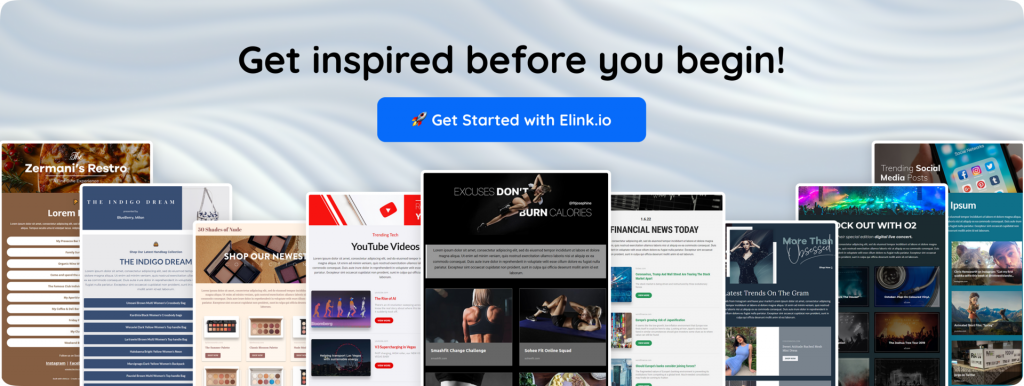
Elink.io is a powerful content curation tool that can make creating your B2B newsletter easier and more effective. It helps you quickly gather, organize, and share content without the hassle of designing everything from scratch.
Here are some amazing features of Elink.io:
- Easy content collection: Quickly add links, images, and videos from around the web to build your newsletter content in one place.
- Multiple content formats: Create not just newsletters, but also webpages, landing pages, social media bios, andlink-in-bio pages using the same content blocks.
- Beautiful templates: You can choose from over 50+ templates that are professionally designed that making your newsletter look polished and engaging without any design skills.
- Automatic updates: Your webpages can update automatically when you connect them with RSS source links, saving you time on manual edits.
- Customization: To give your newsletter a consistent feel, use your selected brand colors, fonts, and logos to personalize your newsletters.
- Responsive design: Newsletters created with Elink.io look great on all devices, whether your leads are checking on a phone, tablet, or desktop.
- Analytics: Track how your newsletters perform with easy-to-understand analytics that show reader engagement and clicks.
- Easy embedding & integrations: Embed your newsletters and webpages directly into websites, blogs, email campaigns, and social media platforms, or integrate Elink.io with your existing tools to share content seamlessly across multiple channels.
The video below walks you through the complete process of creating a newsletter using Elink.io.
Wrapping It Up
Sending a monthly newsletter to your B2B leads doesn’t have to be hard or overwhelming. When you take the time to set clear goals, really understand your audience, and plan your content thoughtfully, you create something that people actually want to read.
💥Bonus: Tools like Elink.io can take a lot of the guesswork and busywork off your plate while creating newsletters. So that you can focus on what really matters: connecting with your audience.
At the end of the day, consistency and providing value to your audience are what build trust. A newsletter should never be viewed as just another email, but rather as a chance to establish authentic relationships with customers.
FAQs
1. How can a monthly newsletter help in B2B lead nurturing?
A monthly newsletter keeps your business at the forefront of your leads’ minds by providing useful information, tips, and updates. It builds trust over time, demonstrates your expertise, and helps lead feel more comfortable choosing your products or services when they’re ready to make a purchase.
2. How often should you send lead nurturing emails?
It is suggested that sharing monthly emails is a great place to start. They keep the connection alive with your leads without overwhelming them. However, frequency depends on your audience and content; some businesses may send biweekly or quarterly.
3. What are the tools that can be used to create a monthly newsletter?
Tools like Elink.io, Mailchimp, and HubSpot make creating and sending newsletters easy.
4. What are common mistakes to avoid in monthly newsletters?
Avoid being too salesy, sending long emails, ignoring your audience’s interests, missing clear calls to action, and being inconsistent in sending.
Keep Reading & Learning 📚
Curated Newsletter vs. Original Content: Which Converts Better?
20 High-Converting Email Newsletter Examples You Need to See
The Best Newsletter CTA Formulas (That Actually Get Clicked)
Account-Based Marketing: What is it & How to Implement it?
How to Use Social Media Content For Email Marketing