The travel industry is expanding rapidly, and so is the competition.
Nowadays, travelers do not simply reserve a trip; they take their time to look into the destination, perhaps for weeks. They find hundreds of Instagram posts, read reviews, watch videos on YouTube, and compare many different options before making a decision. So, if your tourism business is not visible in the right places, at the right time, with the right content, someone else is making a sale that could have been yours.
If you do not have a massive budget or a big marketing team, you may think it is difficult to get results, but that is not really the case. With the right tourism marketing strategies, you can indeed do very well.
This guide offers 10 solid travel marketing strategies currently used by tourism brands to attract more visitors, expand their audience, and keep their schedule full. Whether you operate a small tour company, a boutique hotel, or a destination management organization, these tourism marketing strategies will be effective.
Now, let’s start by understanding the basics of Tourism marketing.
What Is Tourism Marketing?
Before we move on to the strategies, let’s clarify what tourism marketing means first.
Tourism marketing is the way of advertising a travel destination, tourism business, or travel experience with the purpose of attracting visitors and generating bookings. It includes all your online channels like website, social media, email marketing, influencer collaborations, and content marketing.
An effective tourism marketing plan has at least these three capabilities, connecting your brand with the right audience of travelers, building their trust, and simplifying conversion.
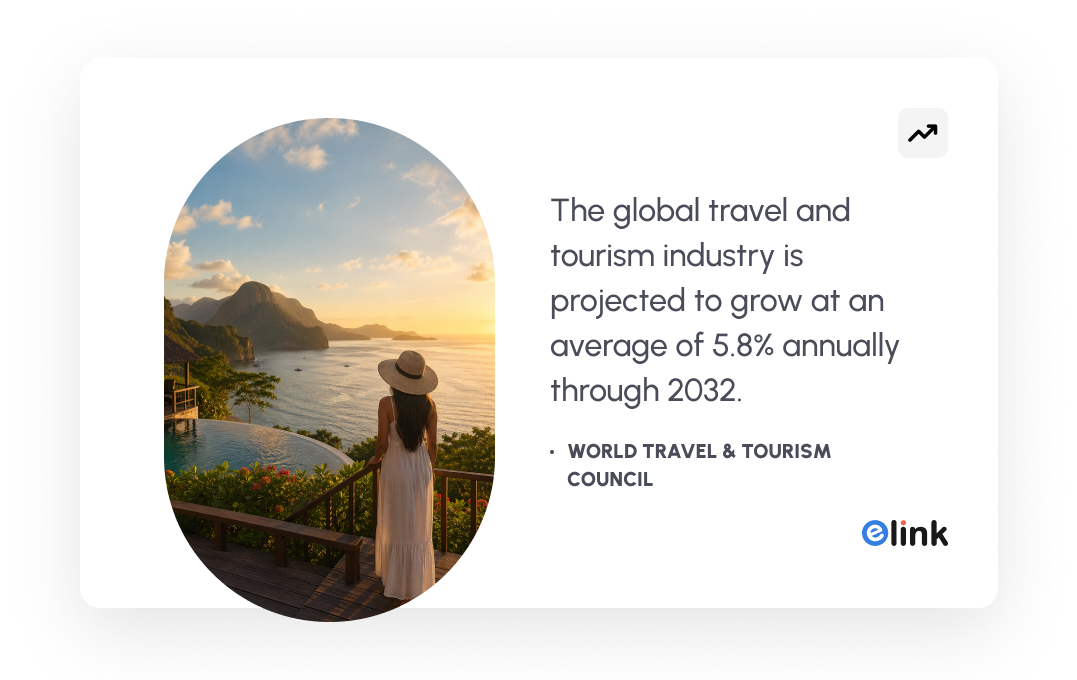
📌 Did You Know? The global travel and tourism industry is projected to grow at an average of 5.8% annually through 2032, according to the World Travel and Tourism Council. (stat card)
Now that you have a clear understanding of tourism marketing, let’s explore some proven tourism marketing strategies you can use to attract more travelers and increase bookings.
10 Proven Tourism Marketing Strategies
In a crowded and very competitive travel industry, having a strong strategy is a must if you want to stand out. Here are 10 proven tourism marketing strategies that can help your tourism business find the right audience, establish great trust, and get more bookings.
1. Build a High-Converting Tourism Website
Your website is your most important marketing asset. It is often the first impression a potential visitor gets of your brand and in travel, first impressions are everything.
A high-converting tourism website needs to do more than look pretty. It needs to load fast, work perfectly on mobile, and make it simple for visitors to find information and book without friction.
Here are a few points you should keep in mind for a tourism website:
- Clean, easy-to-navigate design with strong visuals
- Mobile-first layout — most travelers browse on their phones
- Clear calls-to-action on every page
- Real photos and videos — not stock images
- Fast load times — travelers will not wait
💡 Quick Tip: Add a live chat or chatbot to your website. AI-powered chat tools can answer common questions instantly, 24/7 — which means fewer lost bookings from visitors who could not find the information they needed.
2. Invest in Local SEO
When someone searches “best hiking tours in Colorado” or “boutique hotels near Savannah, Georgia,” you want your business to show up. That is exactly what local SEO does.
Local SEO helps your business rank higher in search results when travelers are looking for experiences in your area. It is one of the most cost-effective travel marketing techniques available, because the people searching are already ready to book.
Here’s how to get started with Local SEO:
- Claim and fully optimize your Google Business Profile
- Use location-specific keywords throughout your website content
- Collect and respond to reviews on Google, TripAdvisor, and Yelp
- Create destination guides and local content that answers traveler questions
📌 Read Also: SEO Secrets: How To Turn Links into Traffic Goldmines
3. Use Social Media to Tell Visual Stories
Travel is one of the most visual industries in the world. Destinations, experiences, food, culture — all of it translates beautifully to social media. And in 2026, social media remains one of the most powerful travel promotion strategies available.
But not every platform is worth your time. Here is where to focus:
- Instagram — destination inspiration, reels, behind-the-scenes content, and influencer collaborations
- TikTok — short-form storytelling, destination highlights, and viral travel content
- Pinterest — trip planning content, itineraries, and destination boards
- YouTube — long-form travel guides, destination tours, and travel vlogs
The key to social media success in tourism is consistency and authenticity. Real moments, real travelers, and real stories outperform polished ads every single time.
4. Use User-Generated Content (UGC)
User-generated content is exactly what it sounds like — content created by your guests and visitors, not your marketing team. And it is incredibly powerful.
When a traveler posts a photo from your tour, writes a glowing review, or tags your hotel in their vacation highlights, they are doing your marketing for you. That kind of authentic, peer-to-peer content builds more trust than any paid advertisement ever could.
Here’s how you can encourage user-generated content (UGC) for tourism marketing:
- Create a branded hashtag and promote it actively
- Run photo contests with prizes for the best travel shots
- Ask guests to tag your business when they share their experiences
- Feature guest content on your own social channels and website — with permission
💡 Quick Tip: Create a dedicated “share your experience” moment at your destination — a photo-worthy spot, a branded backdrop, or a unique visual element that guests will naturally want to photograph and share.

5. Partner With Travel Influencers
Influencer marketing has become a must-have strategy for tourism brands. Travel influencers have built audiences of engaged followers who trust their recommendations — and a single post from the right influencer can introduce your brand to thousands of potential visitors overnight.
You do not need to work with mega-influencers with millions of followers. In fact, micro-influencers — those with 10,000 to 100,000 followers in a specific niche — often deliver better results because their audiences are more engaged and targeted.
What a good influencer partnership looks like:
- A hosted experience in exchange for authentic content
- Sponsored posts or stories featuring your destination or tour
- Long-term ambassador relationships for ongoing brand exposure
- Blog posts or YouTube videos that rank in search and drive traffic over time
📌 Did You Know? According to research from Traviyo, influencer marketing in travel is now a multi-billion-dollar industry and its impact on travel decisions continues to grow year over year.
6. Focus on Content Marketing and Blogging
A well-written travel blog does two things at once — it helps your website rank higher in search engines, and it gives potential visitors the information and inspiration they need to book with you.
Great content marketing for tourism is not about writing sales pitches. It is about answering the real questions your audience is searching for — things like “best time to visit Sedona,” “what to pack for a safari,” or “hidden gems in New Orleans.”
Types of content that work well for tourism brands:
- Destination guides and itineraries
- Travel tips and packing lists
- Local food and culture guides
- Behind-the-scenes stories from tours or experiences
- Seasonal content tied to events and travel trends
💡 Quick Tip: Use elink.io Chrome Extension to save articles, travel resources, and destination content from across the web. Bundle them into a curated resource page or a “travel reading list” newsletter to share with your audience — instantly adding value without creating everything from scratch.
7. Run Targeted Paid Advertising
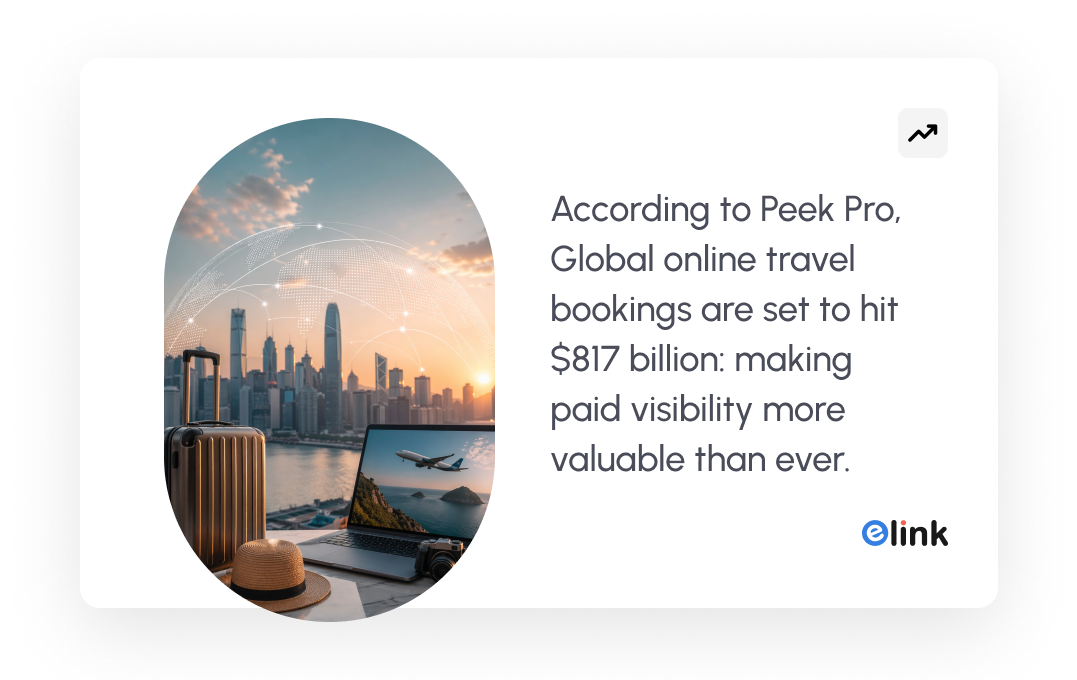
Organic strategies take time to build. Paid advertising gives you immediate visibility in front of travelers who are actively searching for what you offer.
For tourism brands, the most effective paid channels are:
- Google Search Ads — target high-intent keywords like “book whale watching tour Cape Cod”
- Meta Ads (Facebook and Instagram) — great for visual destination promotion and retargeting
- YouTube Ads — reach travelers in the research phase with destination video content
The key to paid advertising success in tourism is targeting. Do not waste budget on broad audiences. Focus on travelers who have visited your website, searched for related destinations, or shown interest in similar travel experiences.
Relevant read: Social Media Advertising: How to Run Ads That Actually Work
8. Prioritize Sustainability and Authentic Storytelling
Modern travelers — especially younger American tourists — are increasingly choosing destinations and brands that align with their values. Sustainability, local culture, and authentic experiences are no longer bonus features. They are decision-making factors.
According to Expedia’s Unpack ’25 report, 63% of travelers say they are likely to visit a lesser-known, “detour destination” on their next trip. They want off-the-beaten-path experiences — not tourist traps.
What this means for your marketing:
- Share honest, real stories about the experiences associated with your destination, its history, and culture.
- Highlight local partnerships, community involvement, and eco-friendly practices
- Where possible, provide local perspectives and authentic guest experiences (as opposed to generic advertising).
- Be transparent about what visitors can expect — honesty builds trust
Read more: Curate Beautiful Travel Blogs & Guides In Minutes With Elink
9. Use Data and Analytics to Optimize Your Strategy
The best tourism marketing plan is one that evolves based on real data. Without tracking what is working and what is not, you are essentially guessing — and guessing costs money.
Key metrics every tourism brand should track:
- Website traffic and booking conversion rates
- Email open rates and click-through rates
- Social media engagement and follower growth
- Paid ad performance and cost per booking
- Search rankings for your target keywords
Use tools like Google Analytics, Google Search Console, and your social media platform insights to understand your audience better and optimize your strategy over time.
💡 Quick Tip: Elink.io includes built-in analytics that show you exactly which pieces of curated content are getting the most clicks in your newsletters. Use this data to understand what your audience actually wants to read and create more of it.
10. Create and Distribute Email Newsletters
Email marketing consistently delivers one of the highest returns on investment of any marketing channel. For tourism brands, it is an incredibly effective way to stay connected with past visitors, nurture potential travelers, and drive repeat bookings.
But here is the catch — most travel email newsletters are boring. Plain text, generic updates, and zero visual appeal. In an inbox full of competition, a dull email gets deleted without being opened.
The solution is sending visually rich, curated travel content that actually gives people a reason to click.
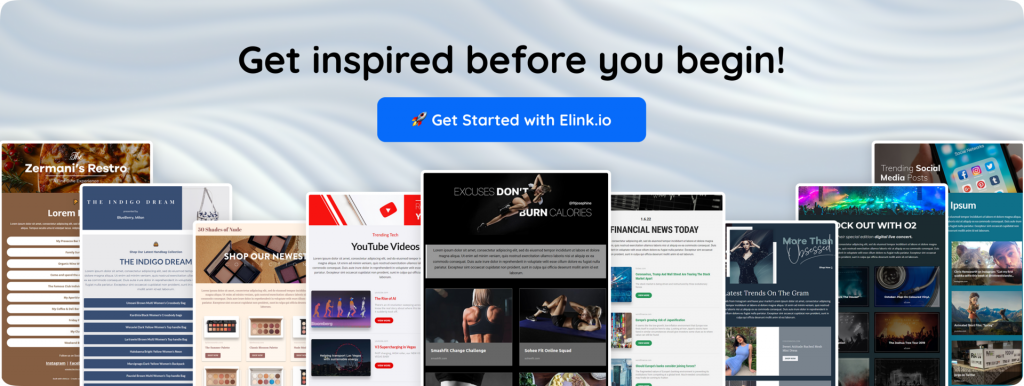
This is exactly where elink.io comes in. Elink.io is a content curation and newsletter creation tool that lets tourism brands build beautiful, visual email newsletters, webpages, social media bio links, and curated resources in minutes, without any design skills or coding. You simply add your web links: travel guides, destination highlights, blog posts, booking offers, and Elink automatically formats them into a stunning, professional newsletter layout.
Bonus resource: Travel Newsletter Templates You Need to Check Out!
Here is what makes Elink.io Perfect for travel email marketing:
- 50+ responsive, travel-ready newsletter templates
- Real-time content updates — your audience always sees fresh information
- Integrates directly with Mailchimp, Gmail, ActiveCampaign, and more
- Chrome Extension to save and curate travel content on the go
- Built-in analytics to track what content gets the most clicks
Instead of spending hours designing an email from scratch, tourism brands using elink can create a gorgeous, click-worthy newsletter in under 15 minutes — and send it through whatever email platform they already use.
You have the strategies but executing them shouldn’t be a hassle. The right tool organizes your travel content and makes distribution completely effortless. In the next section, we’ll explore how elink.io can be your best partner for your tourist marketing.
Why Elink.io Is the Best Tool for Tourism Marketing
Every strategy in this guide comes down to one thing — getting the right content in front of the right traveler at the right time. And that is exactly what elink.io is built for.
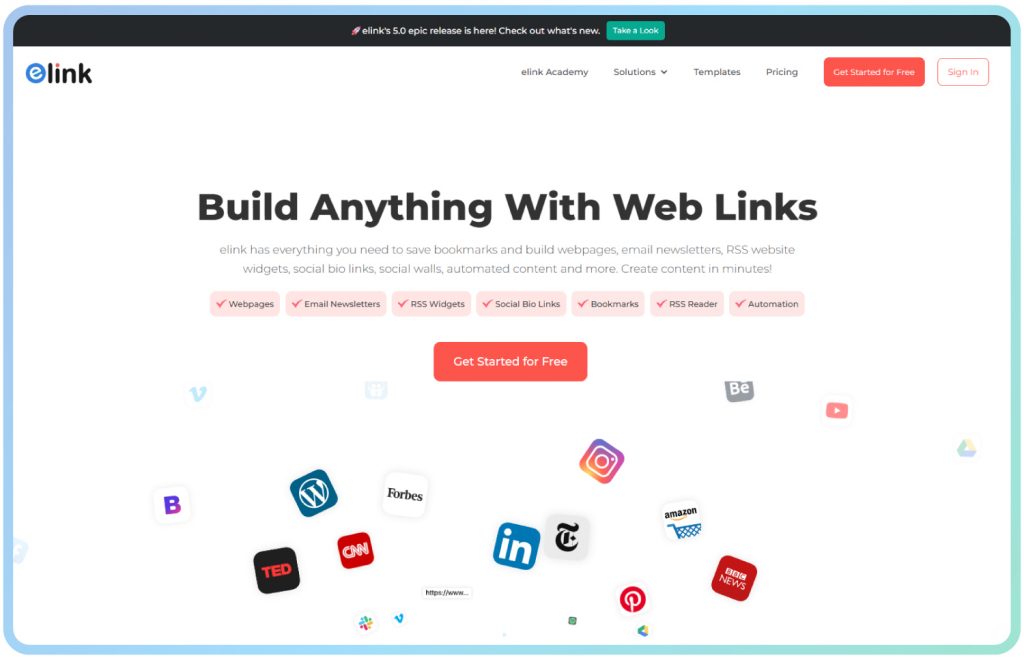
Whether you are running a boutique hotel, a local tour company, or a destination travel brand, Elink gives you everything you need to create, curate, and share stunning travel content — without hiring a designer or learning any code. Ready to jump in? You can easily get started with elink.io today.
Here are some of the amazing features provided by elink.io that tourism marketers are absolutely going to love.
1. Social Bio Links for Every Platform
Running Instagram, Twitter, YouTube, or Facebook for your tourism brand? elink lets you create a beautiful, curated social bio link page — one single link that houses all your travel content, destination guides, booking links, and more. Instead of sending followers to a plain link-in-bio tool, you give them a fully visual, branded page that showcases everything your travel brand has to offer. It is one of the smartest travel promotion strategies for any tourism brand active on social media.
2. Visually Rich Email Newsletters – In Minutes
Most travel emails look bland. Elink changes that completely. With 50+ beautiful, responsive newsletter templates, your travel promotion strategies finally look as good as the destinations you are promoting. Add your travel links — blog posts, destination guides, booking pages, tour highlights — and Elink instantly builds a gorgeous, click-worthy newsletter around them.
3. Curate and Share Travel Content Everywhere
Elink is not just an email tool. It is a full content curation platform. Save articles, videos, and travel resources from anywhere on the web using Elink’sChrome Extension, bundle them into a visual collection, and share it as a standalone web page, embed it on your website, or send it as a newsletter. One piece of content distributed everywhere — with zero extra effort.
4. Instant Webpage Creation
Create beautiful destination guides and travel resource hubs in minutes. Curate articles, videos, and booking links using elink’s Chrome Extension, arrange them in stunning layouts, and publish as responsive webpages — no coding needed.
5. Works With the Tools You Already Use
Elink integrates directly with Mailchimp, Gmail, ActiveCampaign, and virtually every major email platform. It also connects with Zapier to distribute your travel content across 1,000+ apps — including social media platforms, making it one of the most flexible travel marketing techniques available today.
6. Built-In Analytics
Know exactly which destination features, travel articles, and booking links are getting the most clicks. Use that data to sharpen your content strategy and give your audience more of what they actually want.
For any tourism brand serious about how to promote a travel business online, Elink.io is the fastest, simplest, and most visually powerful way to do it.
Conclusion
Travel marketing is not about doing more but rather about doing the right things, efficiently and effectively.
From strengthening your website and focusing on local SEO to designing attractive email newsletters and cooperating with influencers, these guidelines here will outline for you how to attract more tourists, build your brand, and increase your bookings.
But if you are inclined to email marketing, a lack of design experience should not be a barrier for you. Nowadays any tourism brand can produce visually appealing, top-notch newsletters within minutes, using elink.io for example, and also distribute them through the very email platform they have been using without interruption.
Begin with a single approach. Gain your speed. And keep on being there for your audience, because those travel companies that succeed are the ones that maintain their efforts over time.
🗝️ Key Takeaways
A high-converting website and strong local SEO are the foundation of any successful tourism marketing strategy.
Visual storytelling on social media — especially Instagram, TikTok, and Pinterest — drives powerful travel inspiration.
User-generated content and influencer partnerships build trust more effectively than traditional advertising.
Email newsletters with rich visual content drive strong engagement and repeat bookings — tools like elink.io make this fast and easy.
Always track your data and optimize based on what is actually working for your specific audience.
FAQs
Q1. What are the most effective tourism marketing strategies?
To produce an effective tourism marketing plan you will need to combine a strong digital presence with authentic storytelling. Use local SEO to capture search traffic, social media to inspire travel, and newsletters for engagement. Consistently blending these channels over time yields the absolute best results.
Q2. How can influencer marketing increase tourist visits?
Travel influencers have dedicated audiences looking for inspiration. When they share authentic experiences with your brand on Instagram or YouTube, it introduces your destination to thousands of trusting potential visitors, easily driving highly targeted and cost-effective results.
Q3. How can Elink help promote tourism businesses online?
Elink.io allows a tourism brand to create professional email newsletters in no time. Simply enter the web links such as travel articles or booking pages and Elink will format them automatically for you. Elink integrates perfectly with all of the major email marketing solutions, making it quick, easy, and efficient for you to market your company.
Q4. Can elink integrate with social media for tourism promotion?
Yes! You can create curated collections of social media posts, videos, and articles to embed on your site. elink also easily connects with Zapier, allowing you to automatically distribute your travel content across numerous social media platforms.
Relevant reads 🚀
- 7 Newsletter Trends You May Have Missed!
- Global Marketing: Definition, Strategies,Tips & Examples!
- How to Build a Strong Brand Visual Identity? (Key Elements)
- 12 Marketing Analytics Tools to Boost Brand Growth